
Every commercial swimming pool depends on its interior surface to contain water, withstand daily use, and support reliable facility operations. But as pools age, the original finish can become a source of recurring problems. Cracks, leaks, rough surfaces, staining, and repeated repairs can leave facility operators questioning whether another traditional resurfacing project is the best use of their budget.
A commercial pool membrane offers a different approach. Rather than relying on the existing finish to provide the pool’s waterproof interior, a reinforced PVC membrane creates a new, continuous water-containing surface inside the existing pool structure.
At RenoSys, we’ve specialized in commercial aquatic construction and renovation since 1987. Our 60 mil reinforced PVC pool membrane is designed for public and commercial swimming pools, providing a watertight, textured interior that can help facilities address recurring surface problems without automatically rebuilding the entire pool. We believe the best renovation decisions begin with understanding the pool’s condition, the facility’s operating needs, and the performance expected from the finished system.
What Is a Commercial Pool Membrane?
A commercial pool membrane is a reinforced waterproof material installed along the interior surfaces of a swimming pool. It creates a barrier between the pool water and the underlying vessel, providing a new interior finish while allowing a suitable existing structure to remain in place.
Our RenoSys PVC membrane is 60 mil thick, reinforced, and textured for commercial aquatic applications. During installation, membrane sections are fitted to the pool and heat welded together to create watertight seams. The finished system is designed to resist tearing and water loss while providing a durable, nonabrasive surface for swimmers.
It’s important to distinguish a commercial PVC pool liner from a typical residential vinyl liner. Public pools experience different operating demands, including heavier swimmer traffic, frequent cleaning, continuous water exposure, and the need to coordinate renovation around programming and facility schedules. A commercial membrane system must be selected and installed with those demands in mind.
The membrane also isn’t a replacement for the pool’s structural shell. The underlying structure still needs to be evaluated and prepared appropriately before installation. That distinction is central to determining whether a membrane is the right solution for a particular renovation.
Why Commercial Pools Need More Than Another Surface Repair
For many facilities, the decision to renovate begins with a problem that keeps returning. A crack is repaired, but water loss continues. The surface is refinished, but roughness or staining eventually returns. Maintenance teams spend increasing amounts of time addressing the same areas, while operators must balance those repairs against programming, staffing, and budget requirements.
These issues can be signs that the existing interior is no longer delivering the performance the facility needs. Repeatedly treating individual defects may not provide the long-term result an owner is looking for, especially when the underlying waterproofing system has become unreliable.
A PVC pool membrane changes the renovation approach by providing a new waterproof interior rather than simply coating or patching the existing finish. When the pool structure is suitable and the installation is properly planned, the system can help address water loss and reduce dependence on recurring surface repairs.
At RenoSys, we look at the problems driving a renovation before recommending a solution. A membrane can be an effective option for many aging commercial pools, but the right scope depends on the condition of the vessel, existing plumbing, penetrations, and other site-specific factors.
What Makes a 60 Mil PVC Membrane Different?
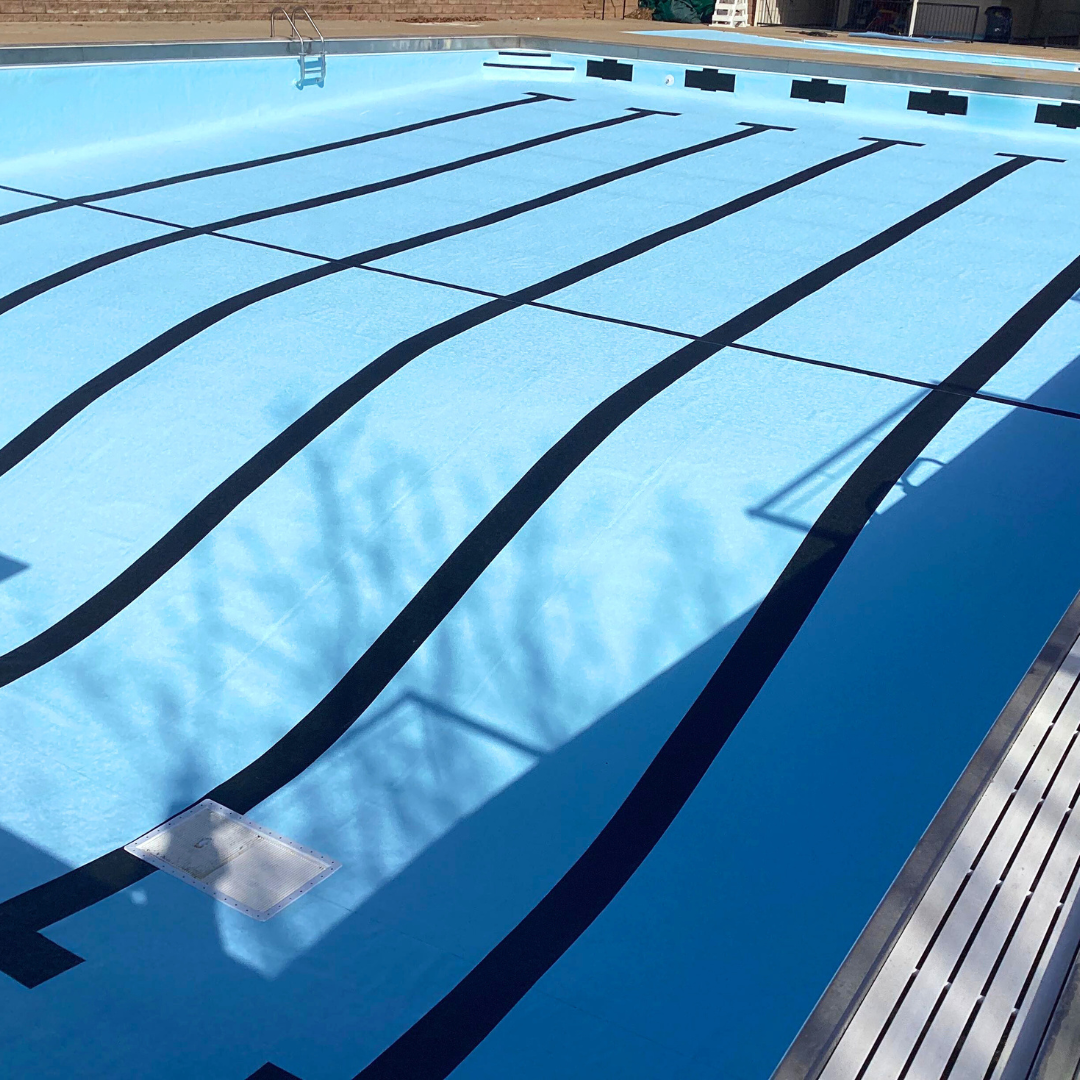
Not all pool liners are designed for the same applications. Thickness, reinforcement, surface texture, material formulation, and installation methods all contribute to the performance of a commercial pool membrane.
Our 60 mil PVC membrane is constructed for commercial use, with reinforcement that helps the material withstand the physical demands of an active aquatic environment. The textured surface provides slip resistance, while the flexible material can be fitted to different pool shapes and configurations.
However, thickness alone shouldn’t determine which membrane a facility selects. The complete system matters, including how the material is attached, how seams are welded, how fittings are sealed, and how transitions and corners are detailed. Even a high-quality membrane depends on appropriate preparation and installation to perform as intended.
We also offer different colors and textures, along with options for custom logos and pool markings. These choices allow facilities to consider the appearance and function of the finished pool while planning the technical requirements of the renovation.
Watertight Seams and Proper Detailing
A commercial pool membrane needs to function as a continuous waterproof barrier. That means the quality of the seams and the details around drains, inlets, lights, and other penetrations are just as important as the material itself.
At RenoSys, our installation process includes heat welding membrane seams and using appropriate flange details at penetrations. The existing pool must also be assessed so that attachment areas and deteriorated sections can be addressed before the membrane is installed.
These details are especially important in commercial pools, where complex configurations and frequent use make reliable water containment a priority. A successful installation depends on treating the membrane as a complete system rather than simply placing material over the existing surface.
The Role of a Pool Membrane in Commercial Pool Renovation
Choosing a membrane is only one part of planning a successful commercial pool renovation. Before work begins, facility owners should understand the condition of the existing pool and determine which problems the project needs to solve.
For example, an aging concrete pool may have surface deterioration but still provide a suitable structural foundation. In that situation, a membrane may offer a practical alternative to removing and rebuilding the entire vessel. If the structure has significant deterioration or unresolved movement, additional evaluation and repairs may be necessary before installation.
Existing plumbing deserves attention, too. A membrane is designed to contain pool water, not to repair leaking supply or return piping hidden behind it. Undetected plumbing leaks can allow water to accumulate behind the membrane and contribute to wrinkles, bubbles, or other problems. We recommend evaluating the relevant systems before finalizing the renovation scope.
This is why we encourage facilities to consider the entire pool rather than focusing only on the visible finish. A renovation may also involve gutters, grating, deck drainage, or other components that affect how the facility operates. Coordinating those needs early can help avoid addressing one problem only to discover another shortly after reopening.
How a PVC Pool Membrane Supports Long-Term Operations
A renovation should be judged by more than the condition of the pool on reopening day. Facility operators also need to consider ongoing maintenance, water containment, serviceability, and the demands of daily operations.
A PVC membrane provides a nonporous interior surface designed to be easier to maintain than some traditional finishes. It doesn’t require the same recurring painting or plaster resurfacing cycle associated with those materials, although routine cleaning, proper water chemistry, inspections, and appropriate care remain essential.
Our membrane also provides a consistent finished appearance, with options for colors, textures, and custom markings. For facilities that need to balance appearance with demanding use, those options can support both practical and aesthetic goals.
We are careful to distinguish warranty coverage from actual service life. RenoSys provides a standard 10-year warranty, while the membrane’s service life depends on factors such as use, climate, maintenance, and facility conditions. The right maintenance practices and attention to water chemistry remain important after installation.
Choosing the Right Commercial Pool Company for a Membrane Project
The membrane product is only part of the decision. The commercial pool company responsible for evaluating the site and installing the system can have a significant influence on the finished result.
Facility owners should ask how the existing pool will be assessed, what surface preparation is required, how seams and penetrations will be handled, and whether plumbing or structural concerns need to be resolved first. It is also worth discussing installation scheduling, warranty coverage, and how the proposed work fits the facility’s operating calendar.
At RenoSys, commercial aquatics is our focus. Our experience includes commercial PVC pool membranes, stainless steel pools, pool gutters, deck surfacing, grating, and other systems used in aquatic construction and renovation. That broader perspective helps us consider how the membrane fits into the facility rather than treating it as an isolated product.
We also recognize that every project has different constraints. A municipal pool preparing for summer, a university natatorium planning a shutdown, and a recreation center addressing recurring water loss may have different priorities. Our goal is to understand those needs and help identify a solution that fits the existing conditions and long-term plans.
Is a Commercial PVC Pool Membrane Right for Your Facility?
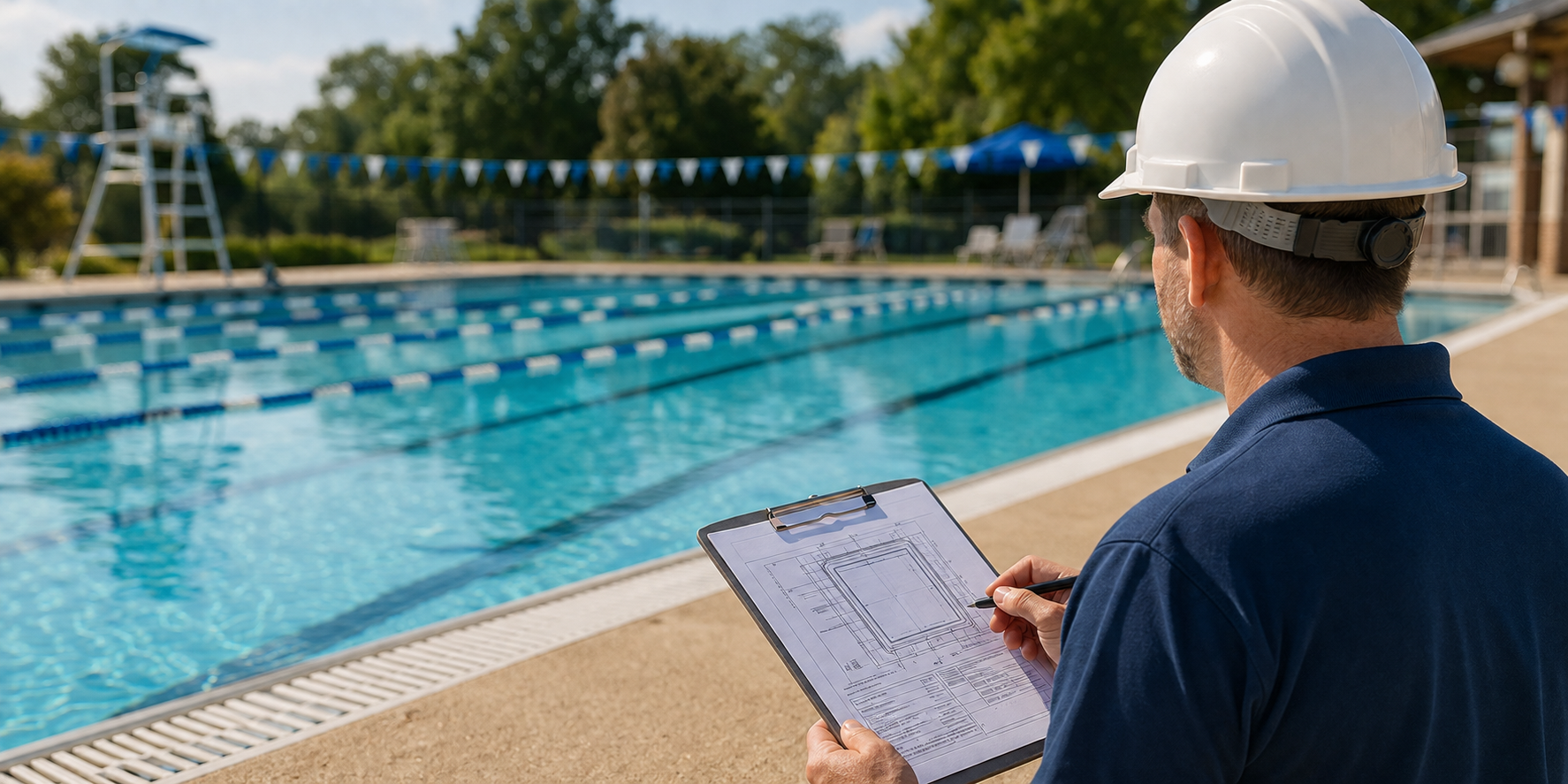
A commercial pool membrane is worth evaluating when an aging pool is experiencing recurring leaks, surface deterioration, roughness, staining, or maintenance demands that are becoming increasingly difficult to manage. It can provide a new waterproof interior while allowing a suitable existing pool structure to remain in service.
That doesn’t mean every pool should receive a membrane. The condition of the vessel, plumbing, attachment areas, penetrations, and other site-specific factors all influence whether the system is appropriate. A professional evaluation is the best starting point for understanding the available options.
At RenoSys, we approach commercial pool renovation with a focus on long-term aquatic performance. We look beyond the immediate surface problem to understand what the facility needs from its pool, which components require attention, and how the finished system can support future operations.
A commercial pool membrane should do more than give an aging pool a new interior. It should be part of a well-planned renovation that addresses water containment, durability, maintenance, and the long-term needs of the facility. That’s the approach we bring to commercial aquatic projects at RenoSys: experience, solutions, and results that last.